
You hear “dental crown,” and you probably think of covering a cracked molar. That’s one use, but it’s far from the only one. Tooth crowns are one of the most versatile restorations in dentistry. They repair damage, protect vulnerable teeth, and anchor other dental work.
Dr. Rita Tempel at Gettysburg Smiles has been placing crowns for years. During her training, her peers elected her President of the Gamma Pi Delta Prosthodontic Honor Society. Prosthodontics is the specialty of restoring teeth with crowns and bridges.
She knows what most Gettysburg patients don’t realize is how versatile crowns really are.
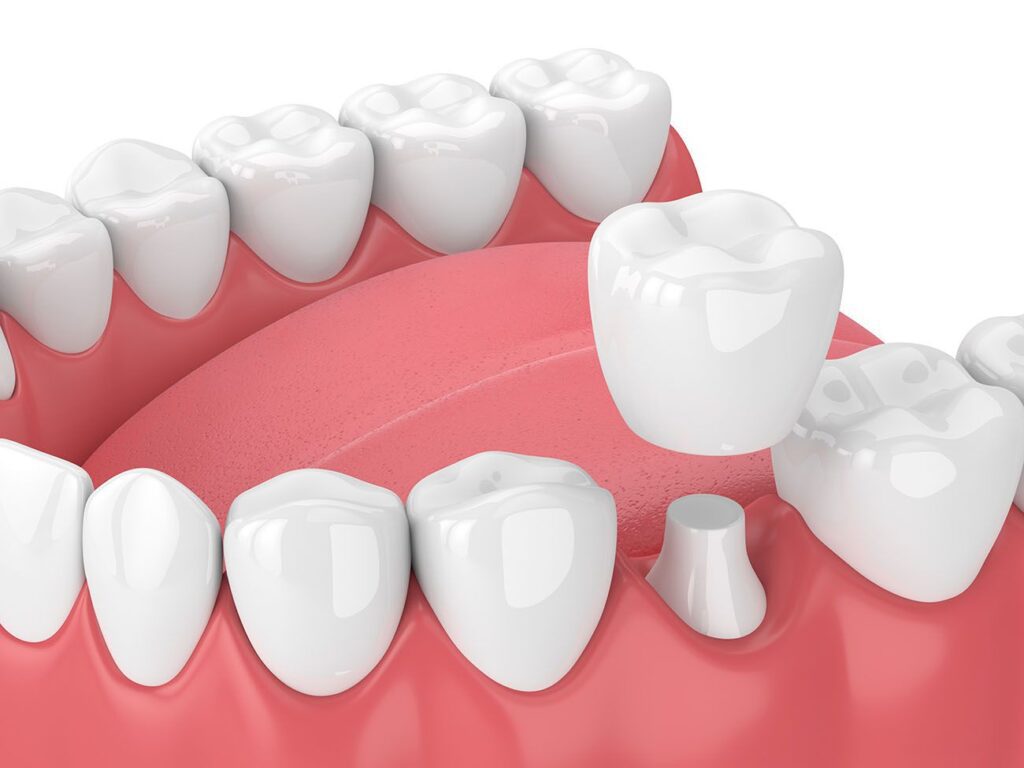
Use 1: Replacing Worn Enamel
Your enamel is the hard outer layer of your teeth that protects the softer dentin underneath. Over time, enamel wears down from acidic foods, aggressive brushing, or grinding. Once enamel is gone, it doesn’t grow back.
When enamel erodes, the dentin underneath is exposed. That leads to sensitivity, discoloration, and a higher risk of decay. A crown covers the tooth and replaces the lost enamel. It protects the dentin from further damage and stops sensitivity pain.
Dr. Tempel evaluates the cause of enamel loss before recommending a crown. If grinding is the culprit, she may also recommend a night guard. Treating the crown without addressing the grinding leads to more wear later.
Use 2: Repairing Broken or Cracked Teeth
A cracked or broken tooth is a dental emergency. It exposes the inner layers of the tooth to bacteria. A broken tooth can cause pain when you chew and can get worse over time.
Small chips can sometimes be repaired with teeth bonding or dental fillings. Larger cracks and fractures need a crown. The crown covers the damaged area, holds the tooth together, and prevents the crack from spreading.
Dr. Tempel’s AACD accreditation required her to submit clinical cases for anonymous peer review. That process trains dentists to evaluate both function and aesthetics. A crack often signals an underlying bite problem. Fixing the tooth without addressing the bite leads to more cracks later.
Use 3: Protecting Teeth After Root Canals
A root canal removes the infected pulp from inside your tooth. It saves the tooth from extraction but can leave the tooth weaker and more brittle. Without protection, it can crack under normal chewing pressure.
A crown seals the tooth and holds it together. It distributes chewing forces evenly and protects the tooth from fracture. Most dentists recommend a crown after a root canal, especially for back teeth. Dr. Tempel will evaluate whether a tooth can support a crown or whether extraction and replacement make more sense.
Use 4: Covering Dental Implants
Dental implants replace the tooth root. A crown replaces the visible part. Together, they restore a missing tooth that looks and functions like a natural one.
The implant fuses with your jawbone over time. Once it’s stable, Dr. Tempel attaches a custom crown on top. The crown is designed to match the color, shape, and size of your surrounding teeth. She has hands-on experience in AACD’s “Give Back a Smile” program with complex reconstruction, which shapes how she plans every implant crown.
Use 5: Anchoring Dental Bridges
A dental bridge replaces one or more missing teeth. It uses the teeth on either side of the gap as anchors. Those anchor teeth are covered with crowns. The replacement tooth connects to those crowns.
The crowns support the bridge and keep it stable. Without them, the bridge wouldn’t stay in place. This is another example of how crowns support other dental work.
Use 6: Improving the Appearance of a Tooth
Crowns can improve how a tooth looks. If a tooth has deep stains that whitening can’t fix, a crown can cover them. A crown can also cover a misshapen tooth or a large filling that’s discolored over time.
Dr. Tempel’s cosmetic work has been featured on the TV show “Dream Weddings.” That recognition reflects her eye for natural-looking results. She matches the shade, shape, and translucency to your natural teeth. Most people won’t be able to tell which tooth has the crown.
Use 7: Correcting Bite Problems
When a tooth is worn down, the bite collapses. Teeth don’t meet properly. That causes uneven wear, jaw pain, and sometimes headaches.
Restoring the tooth to its proper height with a crown can improve how the whole bite functions. Dr. Tempel’s AACD training includes occlusal evaluation. She checks how the crown meets the opposing teeth before you leave. That’s why her crowns feel right the first time.
Use 8: Replacing Large Fillings
A large filling can weaken a tooth over time. The remaining tooth structure flexes under chewing pressure. That can cause cracks and fractures.
A crown covers the whole tooth and distributes pressure evenly. It’s often the better choice when a filling takes up more than half the tooth’s width. Dr. Tempel will evaluate whether a filling is enough or whether a crown provides better long-term protection.
When a Crown Isn’t the Answer
Crowns are versatile, but they’re not right for every situation. We can treat small cavities with fillings or minor cosmetic concerns with bonding or veneers. Dr. Tempel will recommend the least invasive option that solves your problem.
Schedule Your Crown Consultation
Don’t wait until a small problem becomes a major one. A crown might be the answer you’ve been looking for. Let’s find out together. Call Gettysburg Smiles today at (717) 853-1552 for new patients or (717) 339-0033 for current patients. You can also request an appointment online.